
Cultural Wedding Traditions
Jumping the Broom
“Jumping the broom” is a common ceremony that takes place during many traditional African American weddings. The ceremony, which involves both the groom and the bride jumping over a broom together, signifies their entrance into a new life as husband and wife. The tradition dates back hundreds of years, with the first ceremony taking place in the 1600s. Jumping the broom is a ceremony that holds both symbolic and spiritual significance, and stands as a testament to the “sweeping away” of the couple’s former single lives. Each portion of the broom is thought to hold special relevance to the ceremony: the straws represent family, the handle represents religious implications, and the ribbon oftentimes present on the broom represents the tie/connection that binds the couple together in their new union.
Nuptial Cups
(San san ku do)
One of the many aspects of a traditional Japanese wedding is that of the san san ku do cups, also known as nuptial cups. In the san san ku do ritual, the bride and groom each drink sake (Japanese rice wine) three times, each from thee different cups (called sakazuki). Afterwards, the parents of the bride and the groom follow the same practice, and the three couples are thus sealed in a bond between the two families. The three cups hold special significance, with each round of sips representing a different aspect of the couple’s union: the first sip represents the three couples (the bride and groom and their respective parents), the second sips represent hatred, passion, and arrogance, and the last three sips represent the symbolic unfettering from these three flaws. Oftentimes, the san san ku do ritual replaces the traditional exchange of vows, though in some weddings, the bride and groom can choose to include both the exchanging of vows as well as the san san ku do tradition.
Wedding Table
(Sofreh Aghd)
In Iranian weddings, a prominent custom is that of the Sofreh Aghd, translated as “wedding table” in English. This elaborate set-up features many items and foods that encompass various Iranian virtues and ideals, some of which include symbols of fertility (represented by decorated eggs, almonds, walnuts and hazelnuts), wealth and prosperity (represented by a bowl of gold or silver coins), and the importance of religion and the presence of god in the newlyweds’ relationship (represented by a prayer rug in the center of the spread and the presence of a Qur’an or other sacred text). Oftentimes, Iranian culture is also signified by the inclusion of a poetry book relevant to the country, such as the Shahnameh by Ferdowsi or the Divan by Hafez. The Sofreh Aghd highlights many of the most important ideals and cultural traditions of Iran, and serves as a way of ushering the bride and groom into their new life together amidst sentiments of prosperity and well-being.
Thirteen Gold Coins
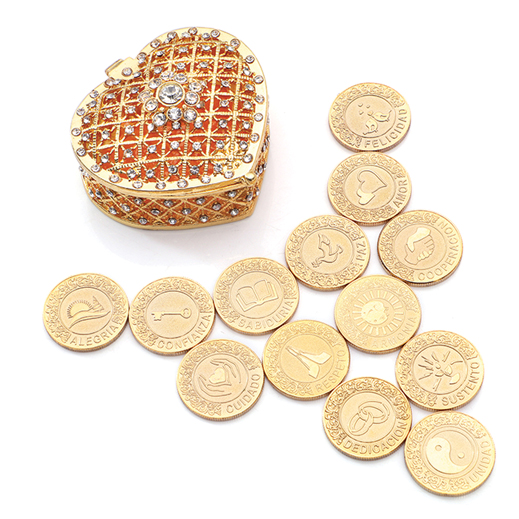
A common tradition among Mexican weddings is the bestowing of thirteen gold coins upon the bride, which ties together aspects of both religion and personal virtue. The groom’s gift of the gold coins symbolizes the notion of trust between the new couple, and the significance of the number thirteen is representative of the Catholic Bible’s story of Christ and his twelve apostles. Additionally, the coins exemplify the notion of prosperity and good wishes. After the coins are blessed by the priest present at the ceremony, the groom bestows them upon his bride at the end of the wedding procession. The bride’s acceptance of the gift symbolizes her decision to take great care of her groom’s trust, while simultaneously promising to bring forth her own honesty and prudence as they enter a new union.


Comments
ADVERTISE WITH US

Katrina Negrete: A Voice That Feels Like Home
There are moments in the theatre when the line between performer and legend disappears, and the audience feels they are witnessing something rare. That was the case at Canyon Theatre Guild when Katrina Negrete stepped into the role of Carole King in Beautiful: The...

Recognizing Excellence: The Legacy of the Silver Spur Award
For more than three decades, the Silver Spur Award has served as a distinguished symbol of service, leadership, and enduring commitment to the Santa Clarita Valley. Established in 1989 by the College of the Canyons Foundation, the Silver Spur is the Foundation’s...

Exciting Upcoming Events from the Valley Industry Association
The Valley Industry Association (VIA) is gearing up for an exciting lineup of events in 2026 that bring together business leaders, innovators, and community champions from across the valley. With a strong focus on professional growth and meaningful connection, these...