
History Center Buildings Ready For Their Closeup Protective film is one more step in protecting artifacts
One of the most critical measures available to museums to protect artifacts–the application of window film to deter ultraviolet light–has been completed on seven of the eight structures and one piece of rolling stock, the Steam Era wooden cupola caboose behind our Southern Pacific No. 1629 locomotive at the Santa Clarita History Center.
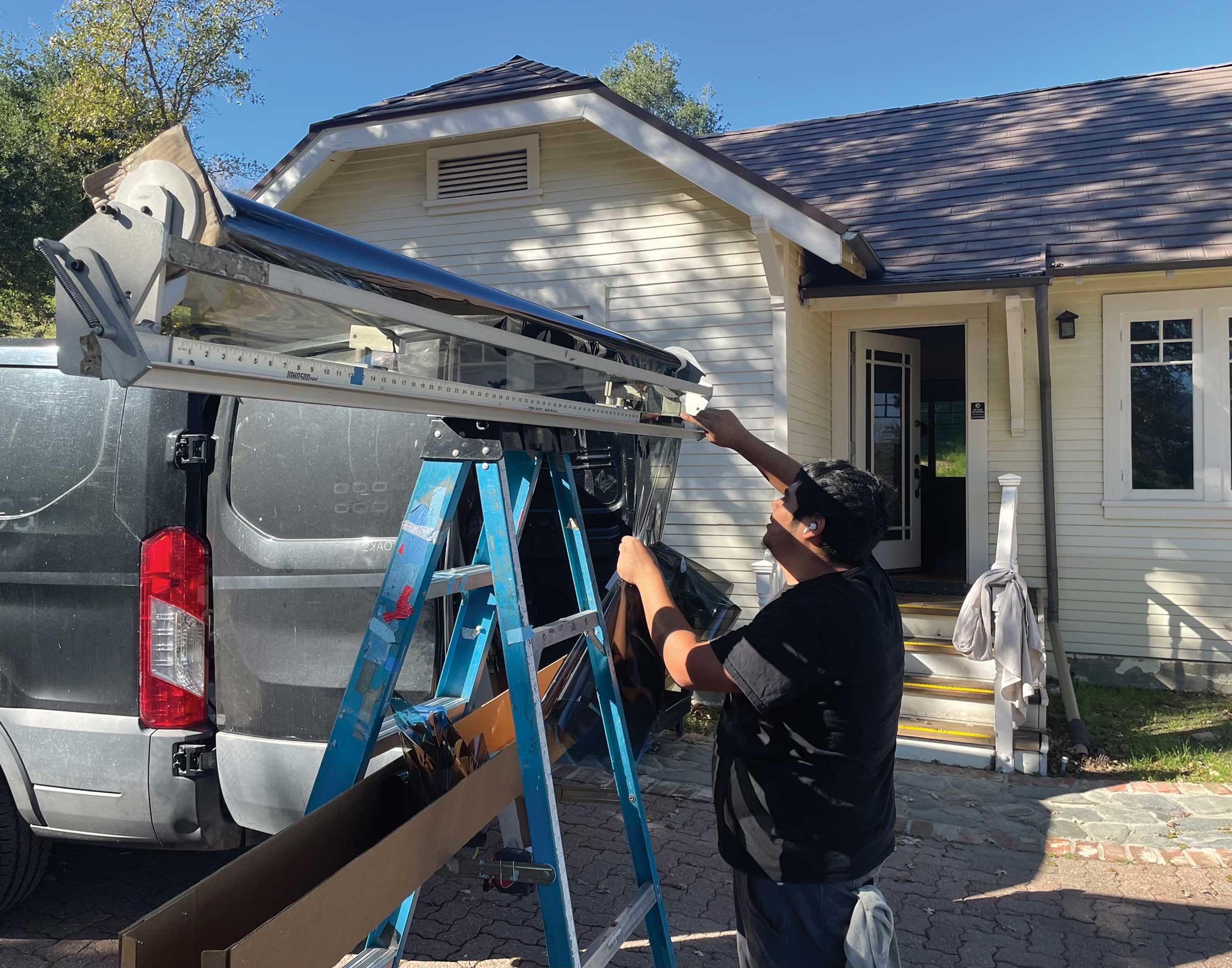
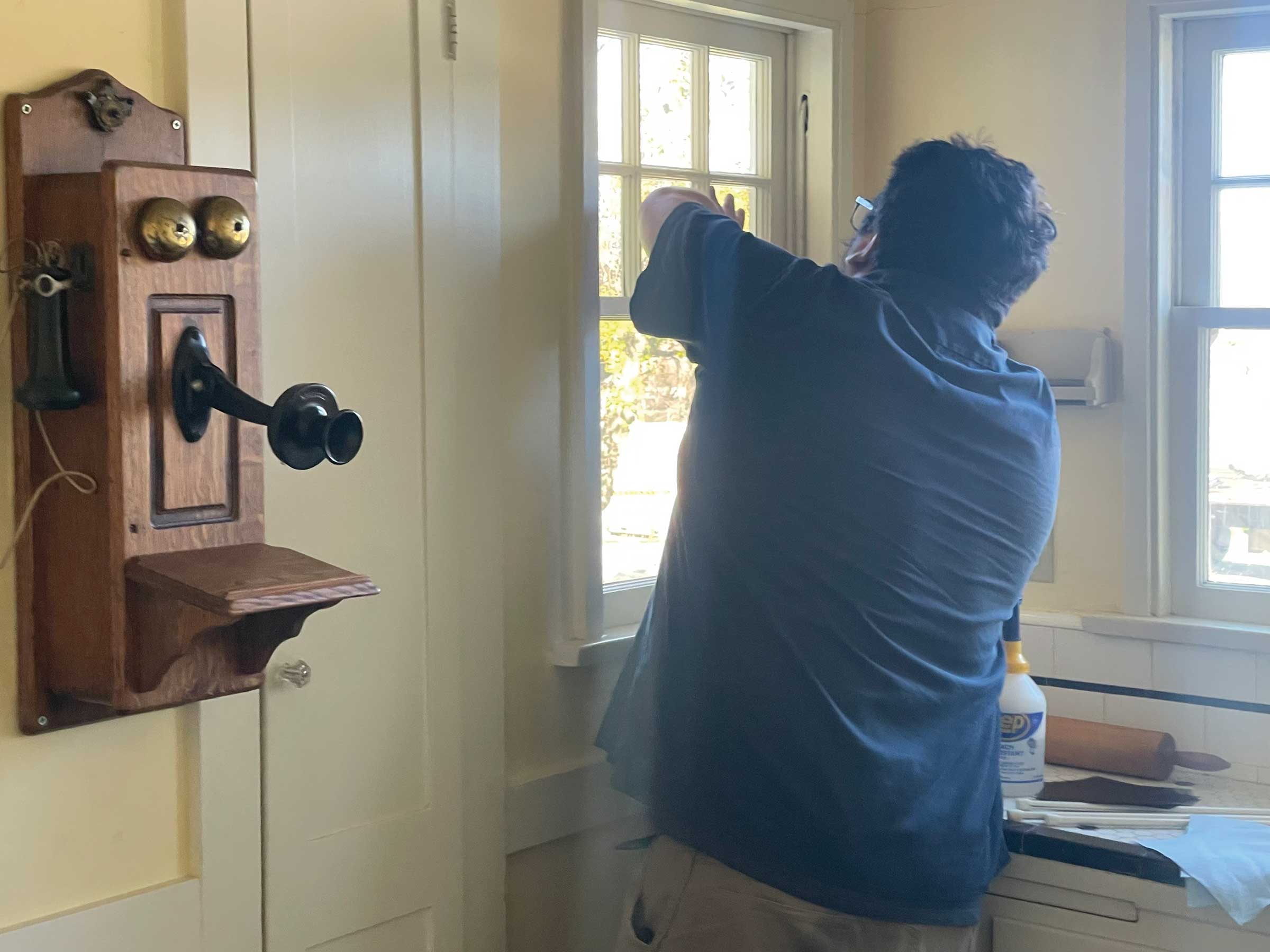
The Center hosted a team of emergency preparedness consultants from the Northeast Document Conservation Center to evaluate, among other things, our archival protection measures. The group’s recommendation resulted in two awards from the California State Library. The first grant was given to the Historical Society in 2023 in the amount of $11,300. This financed UV film applications in the Saugus Train Station Museum and the Pardee House. A second grant in 2025 for $17, 560 supported the extension of this treatment to the Newhall Ranch House, Edison House, Kingsburry House, Callahan’s Schoolhouse, the Mitchell Adobe, and the caboose. Workers spent two days in early December measuring and installing the protective film.
“As a nonprofit collecting institution, our principal mandate is collections care. We hold historic photographs and artifacts in trust for the public, and we have to protect them–not only from pests, humidity, and temperature fluctuations, but also from visible and ultraviolet light damage,” said Collections Manager Leon Worden.
“We opened the first part of the totally renovated Saugus Train Station Museum over the summer after installing UV film on the windows,” he continued. “There is no more nasty light infiltration in the building. Now we’re getting the buildings in Quester Court ready to open in the next month or so, and that means bringing them up to current standards for the sake of the artifacts we display inside them.”
It may sound simple, but UV window film is crucial to historic preservation efforts around the world. Blocking almost all damaging ultraviolet rays, these films prevent irreversible fading, discoloration, and deterioration of original woodwork, textiles, art, and finished while maintaining natural light and architectural integrity. It also improves energy efficiency and reduces HVAC strain in historic buildings, making best use of modern conservation methods.
The grounds of the History Center are open seven days a week from 8 am to 5 pm, and visitors can examine the outside of these buildings. The Saugus Train Station Museum is open on Saturdays from 1 to 4 pm, and we anticipate opening the Edison and Kingsburry houses early this year. To learn more about the Historical Society, visit our website at www.scvhs.org.
SCVHS-MetWest-P2
SCVHS-MetWest-P3
Comments
ADVERTISE WITH US

Ted Sirotta – Forging Future of Financial Strength
When he was growing up, Ted Sirotta was a numbers kid through and through. Even before he went to college and graduated with an Accounting degree from USC, he had a knack for numbers. Over the past nearly seven years, he has been putting his skills to work as the...
Local Retired High School Baseball Coach Jim Ozella Releases Book
Santa Clarita resident and retired William S. Hart High School Baseball Coach Jim Ozella announced his first book was published in the spring. “The Greatest Time to Be a Kid: Stories of Unexpected Adventure” is now available on Amazon.com. This year, Ozella celebrated...
DrinkPak – A Story of Innovation and Community
Located in Newhall, DrinkPAK stands as a testament to the transformative power of vision and determination in the beverage industry. This advanced manufacturing facility, with a total footprint of 1.5 million square feet, merges technology and flexibility to serve...