
Where the Engines Once Roared: Preserving the Spirit of Saugus Speedway
In 1927, Roy Baker built Baker Ranch Stadium on a 35-acre parcel between the railroad tracks and the Santa Clara riverbed. Its grandstands held 18,000 people. In 1930, Baker sold it to actor Hoot Gibson, and stars like Tom Mix, William S. Hart, Harry Carey and John Wayne filled the stands. In 1937, Gibson sold it to stockyard manager Paul Hill, who sold it to Bill Bonelli, Sr. in 1938, who named it Bonelli Stadium and made it the auto racing capital of the area. The Speedway closed mid-season in 1995 due to concerns that the grandstands were unsafe and never reopened for racing. A swap meet opened in the vast parking lot in 1963 and had a 61-year run before closing in October 2024.
Now the property is destined for homes and condos. But fear not – some of the best relics of the glory days of roaring engines and demolition derbies have found a home at the Santa Clarita History Center.
“The Historical Society has wanted to showcase the history of the Saugus Speedway for several years because it has a deep meaning to people inside and outside of the valley. Before Magic Mountain, we were known for the speedway,” said Leon Worden, project manager at the History Center, and a board member of the Society.
“We worked with developer Integral Communities from the beginning,” he continued. “We wanted to ensure that we would have the ability to salvage historic items from the speedway before it was demolished. Lennar closed escrow on the property earlier this year and we are grateful to them for following through. It took some real hard work on the part of several volunteers to recover everything from the entry sign to some of the signage from around the track.”
The salvage operation actually started a couple of years ago when the Society received a couple of the oversized tires used as bumpers on the track. Worden said that Doug Bonelli, who managed the Saugus Swap Meet, helped identify some of the more historic things on the property.
Worden knew that the salvage work was not for the weak. “When we need heavy stuff done at the Historical Society, we turn to Manny Santana. I knew he had an affinity for the speedway and swap meet. He’s been out there working 10-hour days to do things we would not have been able to do otherwise. He dug out the pit scale, which was below ground to weigh race cars and trucks. It’s a 6’ X14’ solid metal and weighs well over a thousand pounds.”
Santana also disassembled and removed the farrier’s forge, a 5×5 brick oven with a hood, made of formed mud bricks surrounded by clay bricks. Now, what the Society needs is a mason willing to donate their expertise to rebuild the forge so it can be put on display.
In 1988, the 1920’s adobe home known as the Bonelli House was demolished. One of the outbuildings was a pool house, but not your ordinary pool house. This one had eight-inch-thick solid concrete walls.
“There was a secret room, sealed with an 80-inch-tall vault door that was locked,” Worden said. Maneuvering a cell phone through a vent, he was able to get a picture of a large box-like item inside – something that looked like a safe.
“Bonelli was an interesting character. After he bought the speedway and started auto racing there, he built the Bonelli (housing) tract in Saugus and started a water company to serve it. He was also a member of the State Board of Equalization, which regulated liquor licenses at the time. In 1939, Bonelli was indicted for shaking down liquor store owners for campaign contributions but was acquitted two years later. In 1955, he was arrested and charged with bribery and fled to Mexico where he lived until his death in 1970.
“Manny and his brother Paul jackhammered through the side of the building and found a 6½ foot tall safe that we brought back to the History Center and opened,” Worden said. “We realized that it was where Bill Bonelli kept his court case files and business records. Drawers were labeled.” Unfortunately, despite the labels, all that was found were race driver waivers and some speedway-related paperwork.
Contributing to the heavy lifting (literally) of the speedway project were George and Mario Molina of Earthwise Demolitions and Abatement Company on neighboring Pine Street, who contributed their crew and equipment for nearly two days’ work. They were key in removing the 32-foot-long entrance sign and its steel support structures and installing the sign once it arrived at the History Center. For all their work, the Historical Society is extremely grateful.
Along with the other items recovered by the demolition company were the first and last mailboxes used on the property; the first is a steel box marked with Baker Ranch from 1920 and the modern Saugus Speedway mailbox. The future exhibit will also feature the NASCAR sign from the crash wall and checkerboard signs the Snack Shack, a long-gone Newhall establishment.
But maybe the coolest thing is the 2X3 foot section of the starting line that Worden helped to dig up. The varied layers of track – from the original dirt to the first paving in 1946, the dirt brought back a year later for midget racing, the second paving in 1956 and one more layer of asphalt several years later – will be on display behind Plexiglas inside the museum for racing fans to admire.
We’d love to hear from any drivers, mechanics, or people involved with the Speedway over the years, as well as memories people might have of good times at the races. Please email crock@scvhs.org with your contact information.
.
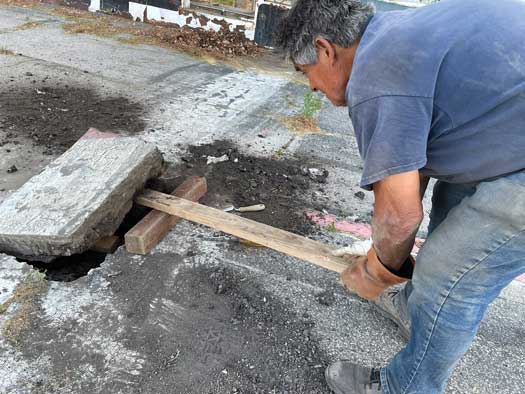
Starting-line-track
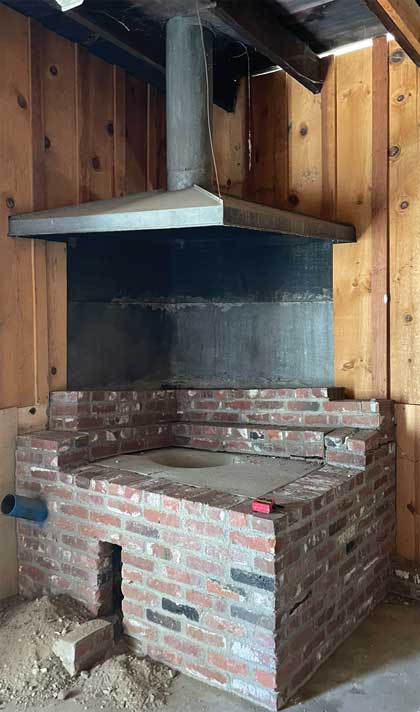
Farrier-Forge
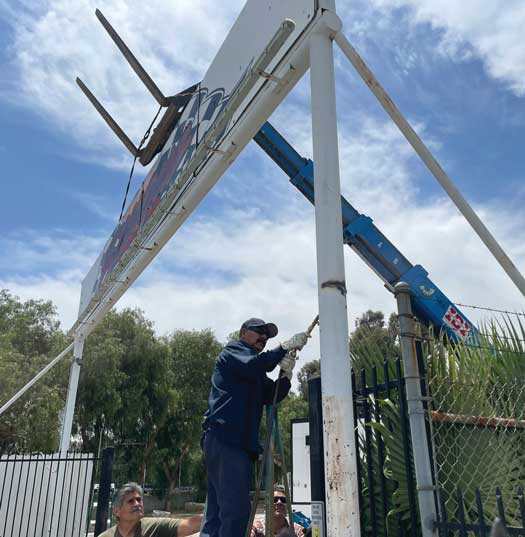
Removing-sign
Comments
ADVERTISE WITH US

Ultimate Medical Award Winners 2026
Congratulations to élite Magazine’s 9th Annual Ultimate Medical Professionals! These are the best of the best in their field voted on by hundreds of community members and our readers. Be sure if you see them to say you saw it in élite Magazine. To vote for the next...
Living Limitless Collective: Building a Community Where Everyone Belongs
In a world where connection can often feel out of reach for individuals with developmental disabilities, Living Limitless Collective is redefining what community truly means. Founded in 2025 by Mariah Gunnin, Director of Operations, the organization was born from a...

Santa Clarita’s Sandi Naba Is Signing Up To Save Lives
Santa Clarita resident Sandi Naba is turning her personal story into powerful action as a 2026 All-Star candidate in Blood Cancer United’s Visionaries of the Year campaign. Now in her fourth year participating, Sandi is competing nationally in a 10-week fundraising...