
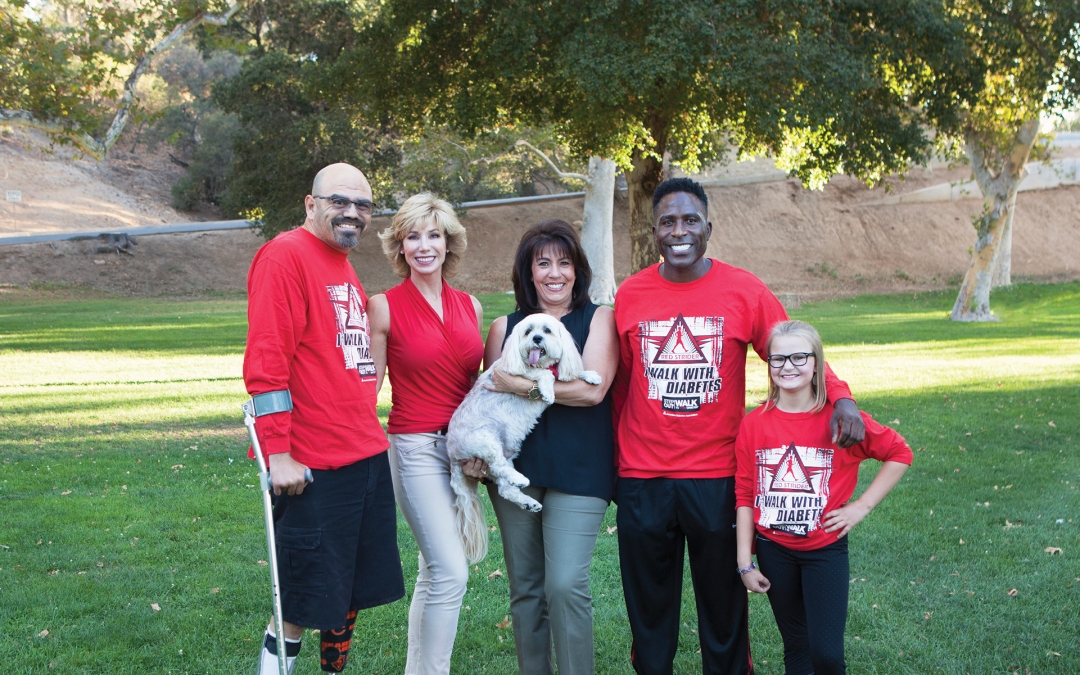
Facing Diabetes – Meet five SCV residents who found courage, strength and empathy despite a life-changing diagnosis
As I sat in Hart Park and interviewed a group of residents who live with type 1 diabetes, I saw the pain of a disease no one asked for; but more than that, as I heard each story, I saw in their eyes the pain of a chronic and detrimental misunderstanding. In addition to the daily pricks and constant monitoring, people diagnosed with diabetes endure the questions and stares of a world that doesn’t understand this disease.
Some are diagnosed too late, their health and dreams affected because of a lack of awareness. Others, who were diagnosed decades ago, spent years searching for the resources, education and support they needed to not only survive but thrive. Still others, often youth with diabetes, are teased or ostracized by children who know nothing of a disease that requires constant strength, bravery and control. And all of them were blindsided.
What most people don’t understand about diabetes is how much it can take from a person – dreams, careers, limbs, a sense of control. All the while, diabetics fill those holes with new dreams, untapped strength and a whole lot of heart. The fight against diabetes, despite the type, requires a team effort, and the American Diabetes Association has been working diligently for 76 years to be that team. It’s my pleasure to introduce to you a few of Santa Clarita’s strongest and most resilient fighters.
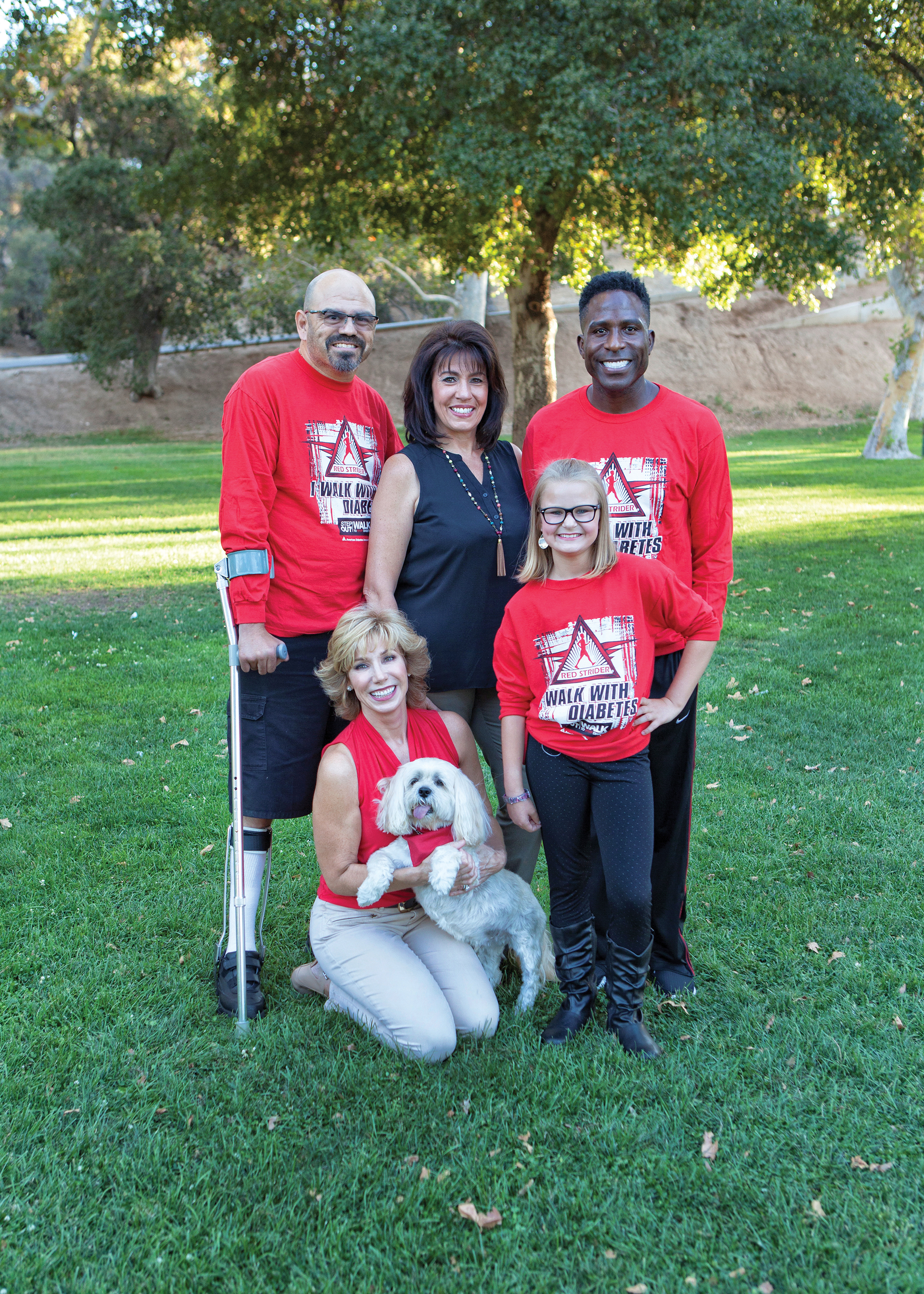
photo by Joie de Vivre Photographie
Rhiana Wynn
The tricky part about diagnosing diabetes is there’s no rhyme or reason: It strikes where and when it pleases. At 10 years old, Rhiana Wynn already feels the repercussions of a disease few understand. Rather than taking constant insulin injections, for example, Rhiana wears an insulin pump around her waist and under her shirt to help keep her sugar levels consistent. Though the pump is smaller than the average pencil box, kids noticed it, and then they asked questions. When girls started asking Rhiana if she was pregnant, the unwanted attention really began to take its toll.
“I don’t let those bad comments get to me anymore,” she said, “because life with diabetes can be cool at times, too. I get to go to diabetes camp and learn more about my body.”
The solution? Education. At the start of each school year, Rhiana’s dad visits her class to explain what diabetes is and how it might make Rhiana seem different from her peers. Taking her challenge in stride, Rhiana has turned the experience into an opportunity to become smarter, stronger and kinder.
“I wish my friends could learn more about why my shirt looks bigger than theirs,” Rhiana said. “And I wish more kids took the time to understand someone who may seem different.”
Rufus Dorsey
When Rufus Dorsey was 17 years old, he had everything going for him: captain of the football team, prom king, and a likely candidate for a full scholarship to college.
“I went from the top of the world to the bottom of the ocean,” he recalled of his diagnosis. “I watched my whole future flash before my eyes. I was embarrassed, ashamed, depressed and, eventually, suicidal. It was the first time I ever quit on myself.”
Rufus struggled through the rest of high school and most of college, hiding the disease because it made him feel defective. One day, his mother challenged him to find his purpose again.
“At that point, there was no one I could really look up to as an athlete and a diabetic,” he said. “So I thought, ‘Why can’t I be that person?’”
Today, Rufus offers a blueprint of sorts to help others with their diagnosis and adjustment. Working with kids, he acts as a voice of empowerment and guidance.
“The way you decide to handle the diagnosis is a choice. It can destroy me, or I can use it as motivation to better my life,” he said. “So we have to face it, own it and move forward.”
Camille and Bailey Jones
The Jones family had no history of diabetes when their 5-year-old daughter, Bailey, was diagnosed with type 1 in 2000. Bailey and her older sister, Camille, had just said goodbye to their grandmother, and two weeks after her passing, Bailey received her diagnosis. Often triggered by trauma, the onset of Bailey’s diabetes and the stress of learning to cope likely sparked Camille’s diagnosis, which came only eight months later.
“Having diabetes means every day is a challenge, and as many times as I would like to take a ‘break’ from diabetes, I can’t,” Bailey said. “It is a very serious disease, but it does not define me.”
Camille’s biggest challenge has been the emotional toll of her diagnosis.
“It’s a disease that requires constant attention and monitoring that, more often than not, leaves me feeling frustrated, exhausted and out of control,” Camille said. “There is a daily fear that I will go too high or too low to be able to perform at work or drive home safely or exercise without feeling like I’m going to collapse.”
Despite the struggle, both sisters have gained an incredible amount of perspective.
“Everyone is dealing with something, whether you know it or not,” Camille said, “and the challenges we face give us opportunities to grow in ways we couldn’t otherwise.”
Eddie Uribe
Eddie Uribe doesn’t have the perfect diabetes story. He wasn’t diagnosed early. He didn’t receive proper care. He grew up in a time when there was little medical or educational support for diabetics. He nearly died before he was even diagnosed – and that was just the first hurdle. Diabetic neuropathy, a below-the-knee amputation and a kidney transplant were all to follow.
When Eddie first became sick, his doctor mistook his symptoms for the flu, causing him to suffer immensely and drastically shed weight until a family friend, also a diabetic, diagnosed him. At 18 years old, Eddie felt like his life had ended before it even began. College football went from a sure thing to a dead dream, and Eddie had no one to turn to for guidance.
He didn’t understand his disease, and it ran rampant in his body and his soul for years – destroying his self-worth and wreaking damage that wouldn’t present until years later.
As he built up his life – marrying, having children and working as a successful chef – Eddie began to take control of his disease. The ADA became an immense support system. Today, he is an active board member with 11 years under his belt, and many in the association regard him as a role model and friend.
“Diabetes is as fragile as a soufflé,” Eddie said. “Everything affects how the soufflé comes out, and as a diabetic, everything affects your sugar levels: eating, exercise, emotion, mood, stress. You need to be in control of mind and body because diabetes can be such a silent yet deadly disease. It takes methodical work to build your health – just like that perfect soufflé.”
How can you help support the fight against diabetes? The American Diabetes Association is hosting their annual Step Out Walk to Stop Diabetes on Saturday, November 5 at Six Flags Magic Mountain. Every dollar raised works to support the association’s mission of preventing and curing diabetes – once and for all. For more information or to form a team, please visit www.diabetes.org/StepOutMagicMountain.
Meet Santa Clarita’s Diabetes Mascot Bumper Fleming
photo by Don Fleming
Many know Bumper Fleming as the cutest greeter at Valencia Acura. One pet is all it takes for Bumper to remember you and rush to your feet when you stop by the friendly community dealership.
In December of 2015, however, Bumper seemed to slow down from his typical greeting workload, and one day, he stopped making the trip upstairs to visit his mom, Cheri Fleming, in her office. At first she thought maybe his hips were getting tired or his back was bothering him. After a visit to the vet and some pain medication for Bumper, Don and Cheri didn’t notice much improvement in his movement or energy levels. What Cheri did notice was a drastic increase in the amount of water Bumper was drinking. A second vet visit confirmed Bumper indeed had diabetes.
“We immediately changed his diet,” Cheri recalled. “He’s so friendly, and people love to give him treats at the dealership. After his diagnosis, there were no longer treats at the dealership. He walks more. He eats a healthy dog diet, and he’s back to chasing me up and down the stairs!”
In addition, Bumper receives two insulin shots a day. While Don and Cheri expected this to be difficult, Bumper took the injections naturally.
“He seems to want his medication because he knows it’s going to make him feel better,” she said. “He just hops right up onto the chair! We’re just so grateful we were able to diagnose him early and adjust his lifestyle. Every extra minute we can get with him is a blessing.”

Comments
ADVERTISE WITH US

Valencia Auto Center: Part of the Neighborhood, Part of the Community
In Santa Clarita, neighborhood means more than geography. It is about connection, shared experiences, and showing up for one another. For nearly three decades, the Valencia Auto Center has been proud to be part of that fabric, not just as a destination for...

Unearth a Story: A Prehistoric Summer of Reading Awaits
This summer, the Santa Clarita Public Library is inviting the community to step back in time (way back) to a world of discovery, imagination and adventure. From Monday, June 8, through Friday, July 24, readers of all ages can take part in the annual Summer Reading...

Valencia Acura Earns Acura Precision Team Award for the 19th Time
Valencia Acura has once again earned the Acura Precision Team Award for 2025, marking the 19th time the dealership has received this prestigious national recognition. The award honors Acura dealerships that demonstrate outstanding performance in sales, service,...