|
by Stephanie Elgin
He was one of many called upon to serve our country during World War II. Shortly after graduating high school in 1944, Morris Deason was drafted into the United States Navy. “They put me on a train and sent me out to Fort Sam Houston in San Antonio,” states Morris, “I wasn’t afraid of the war. When you’re that age, you think you’re invincible.”
Morris continues to share his World War II story with me.
“I was inducted into the Navy on July 24, 1944, and was sent on a train to California for boot camp. I worked with the amphibious forces, learning how to drive a Higgins boat (otherwise known as an LCVP- landing craft, vehicle personnel). From there, we went to San Francisco, picked up the U.S.S. Okanogan APA 220, and then went to Hawaii and picked up about 800 army troops and stayed with the 5th Amphibious fleet.”
“I remember it was Easter Sunday, April 1, 1945, when we did the initial landing on the invasions of Okinawa. There were kamikazes and suicide planes. I remember there being 75 or 80 transports, supply ships, battleships and cruiser tin cans. We were continuously shelling the beaches and the mountains for the Japanese. I remember being in general quarters one evening, when a kamikaze came within 20 feet of our location. It sailed right on over.
From there, we went on to the Liberation of the Philippines, and shortly following escorted the USS Laffey, the damaged destroyer hit by enemy planes, back to Seattle. There were three or four burials at sea and many injured servicemen. After, we headed to San Francisco. I was on leave when I was riding with a buddy in a 42’ Chevy station wagon on the 99 freeway when we were hit by a truck head on. I ended up in the naval hospital for six months. Right after the war was over, I had enough points to be discharged and left the service in June of 1946. I was discharged at Forth MacArthur in San Pedro.”
Life after the War
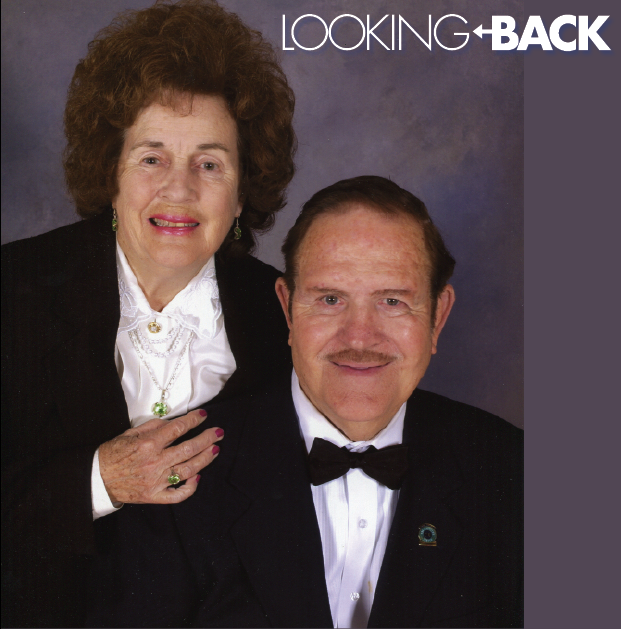
After his military discharge, Morris attended the Glendale School of Aeronautics and got his license and worked for Northrop. It was then, when he met his wife Geraldine. “Geraldine was a checker across the street at a Safeway store,” states Morris, “We met, and two weeks later we dated. Two months later we married.” And they’ve been together ever since. Morris and Geraldine have three children, Michael (who passed on May 5, 1983), Karen and Kathleen, five grandchildren and six great grandchildren.
In 1964, Morris and his family moved to Saugus, where they currently reside. He serves as the vice-president of the Santa Clarita Valley Veterans Memorial committee and is involved with the Library of Congress Veterans History Project partnered with College of the Canyons. Morris is also considered to be one of the pioneers of the City of Santa Clarita as he, along with Carl Boyer III, Jo Ann Darcy, Buck McKeon and others formed the city formation committee in 1985. After two and a half years, LAFCO (Local Agency Formation Commission) granted about 40 square miles for the City of Santa Clarita. “Santa Clarita Valley is the best city to live in, work in and get educated in. It’s an all around great city and I’m happy to be a part of that.”
|
|