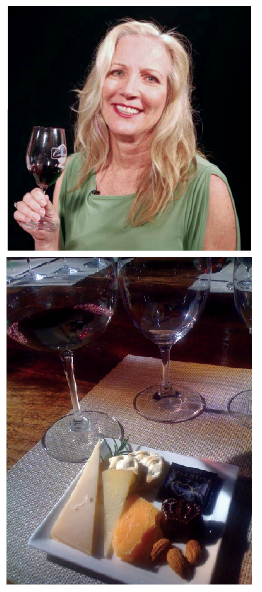
Learn How to Taste Wine Like a Pro. I’ve given a few classes on wine tasting for beginners that include everything from using a waiter’s corkscrew to that final, lingering swallow. In every class I’ve done I’ve made it a point to not talk above anyone’s head. So, with that in mind, this is what the professionals do, and a couple of the simple reasons behind it that are not above your head. Holding your wine glass over a white sheet of paper – Is an effective way to determine the wine’s clarity and color. I often will find a darker color towards the outer rim of the pour, sometimes even some sparkles or “diamonds” in the body. Swirling – It’s pretty, it’s fun, it gives you time to think about the aromas that open up as you aerate your wine. Also try to sniff, swirl and then sniff again, so you can smell what all that swirling actually does. Describing Aromas and Flavors – Sometimes the easiest thing is just to spend a moment to think about it. The nose or taste of your wine may actually call up a memory, say of lemons in a white or chocolate in a red. (It does not mean that the winemaker added those elements.) If you are lost, one of my favorite go-to lines is to say, “There’s a lot going on in this glass.” Chewing your wine – Once you have taken a sip, take another moment to see what fruits or spices you can detect, how full the wine feels in your mouth, if it is drying or fruity. Then, and only then, swallow or spit. Spitting – Not to be confused with spitting out a wine you don’t like, most professionals that are engaged in a small or large tasting can get the flavor of the wine without swallowing it. If they’ve done all of the above steps – their work is done. Pouring out – Again, once you’ve either swallowed or expectorated your taste, most wine people will use the pour out buckets to discard the remaining wine. This is not an insult to the winemaker or his representative that poured it for you. In fact, this is the opportunity to thank them and let them know, if applicable, how you liked their wine. (Of note: spitting and dumping are when one is tasting multiple wines, not when enjoying a glass or bottle with your meal.) Try A New Pairing A simple rule for wine pairing is “like foods with like wines,” which means Italian wine with pasta. Another easy one is color, red meat with red wine for instance. But, if you want to try a new pairing, think out of the box. A few years ago I went to a wine dinner at an Asian restaurant. One of the dishes, I think it was a shrimp in a spicy bar-be-que sauce, was paired with an equally spicy Zinfandel. This pairing did not employ the rule that a white wine is a must with fish. But more importantly, we learned that it is the sauce that the food has been cooked in that mattered. Keep this in mind the next time you are at Le Chene. The French sauces complement every dish from the sides to the main entree. And, if you are unsure, ask your waiter what they would pair with it. Taste a New Varietal People often ask me what my favorite wine is. Sometimes they’ll ask because they figure if I like it they will like it. To explain why that doesn’t work, today I like dark chocolate with sea salt, tomorrow I’d prefer Key Lime Pie, and the next day…who knows? Why limit yourself? There are thousands of grape varieties to choose from. And yet some are just the same grape, which you already love, but grown in a different location. One pal told me that she preferred Merlot or Cabernet Sauvignon exclusively. I suggested she try a Bordeaux, as the prominent grape is either, you guessed it, Merlot or Cabernet Sauvignon that is grown in Bordeaux, France.
|
|
New Year’s Wine Resolutions: What You Should Vow to Learn, Try and Taste in 2013