
WHISKEY 101 – When Wine Just Won’t Cut It
In honor of Father’s Day, I have been tasked with devoting my column to a Q & A all about whiskey. This is not a problem because, for one, I have a certification in Wine and Spirits, and two, my husband and I have co-taught single malt (scotch) whisky classes in our home.
Q: Why did you just spell whiskey/whisky those two different ways?
A: Simply put, any scotch made in Scotland is spelled without the “e;” whiskies made anywhere else – Japan, China, Ireland the U.S. and other places – spell it with the “e.” Think of this rule just as you would when applied to wine. We aren’t allowed to call our sparkling wine Champagne anymore, even if made in the same method. Only wines from Champagne, France can legally have that distinction.
Q: Then the next logical question is: What in the heck is the difference between whiskies labeled as scotch, bourbon and rye?
A: Here is your cheat sheet. Scotch is distilled from malted barley. Bourbon, a U.S.-only product, is distilled from grain mash, and rye is from, well, mostly rye mash.
There are several rules about the percentage of mash used, barrel types, aging and filtering processes for each distilled product, etc., but we can save that for a Whiskey/Whisky 102 class!
Q: What is your favorite whiskey?
A: That’s a great question, and I usually get it regarding wine. My answer is the same: It’s dependent on my mood and what I’m pairing it with. If I want something spicy, I go for rye. Smokey? I go for bourbon. When I don’t want to mix it with anything, I enjoy: a single malt scotch. As far as the pairing, I like all whiskies, in a cocktail or alone, with oysters, a charcuterie plate and dark chocolate flavored with orange or currant.
Q: I’m feeling emboldened now – how do I hold my own single malt scotch tasting?
A: You can hire us (flagrant self-promotion!) or visit your favorite large liquor store with a map of Scotland in hand. Choose scotch from different areas – Islay, Lowland, Highland, etc. Just like wine, single malt will taste different based on the influence of salt, air and/or peat moss!
Serve in the proper nosing glass – or any glass – but pour less than one ounce. Smell and taste without water, then taste again with. Water opens up aromas in single malt, the opposite of what water does to wine.
As you “travel” you will soon start to see the differences between the single malts. You also can try this with other brown spirits!
Eve Bushman has a Level Two Intermediate Certification from the Wine and Spirits Education Trust, a “certification in first globally-recognized course” as an American Wine Specialist ® from the North American Sommelier Association (NASA), was the subject of a 60-minute Wine Immersion video, authored “Wine Etiquette for Everyone” and has served as a judge for the Long Beach Grand Cru. You can email Eve@EveWine101.com to ask a question about wine or spirits. You can also seek her marketing advice via Eve@EveBushmanConsulting.com.

Comments
ADVERTISE WITH US

Where the Engines Once Roared: Preserving the Spirit of Saugus Speedway
In 1927, Roy Baker built Baker Ranch Stadium on a 35-acre parcel between the railroad tracks and the Santa Clara riverbed. Its grandstands held 18,000 people. In 1930, Baker sold it to actor Hoot Gibson, and stars like Tom Mix, William S. Hart, Harry Carey and John...

From Fort Worth to Hollywood: The Journey of Television Director Ken Cooper
For Ken Cooper, working in television was never just a career choice — it was a calling. Raised in Fort Worth, Texas, Ken’s fascination with filmmaking began early. “There was never anything else that captured my attention in the way that filmmaking did,” he shares....
Crafted Through Resilience: Ward Ventanilla and the Rise of Virtuoso Training Club
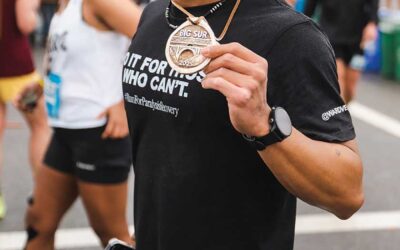
Ward Kelvin Ventanilla is a Neurorecovery Specialist and the passionate founder of Virtuoso Training Club—a growing community rooted in discipline, resilience, and the belief that movement is a blessing.Ward’s journey began during a time of personal uncertainty. After...